A loud grinding sound from your garage door opener, followed by the door failing to open or close completely, can indicate an issue with the opener's trolley. These figures include typical service call charges and labor rates.
The trolley is a critical component. It connects the garage door to the opener's drive system, moving along the rail to pull the door open and push it closed. When it breaks, your garage door simply won't function correctly, if at all.
Understanding the Garage Door Opener Trolley
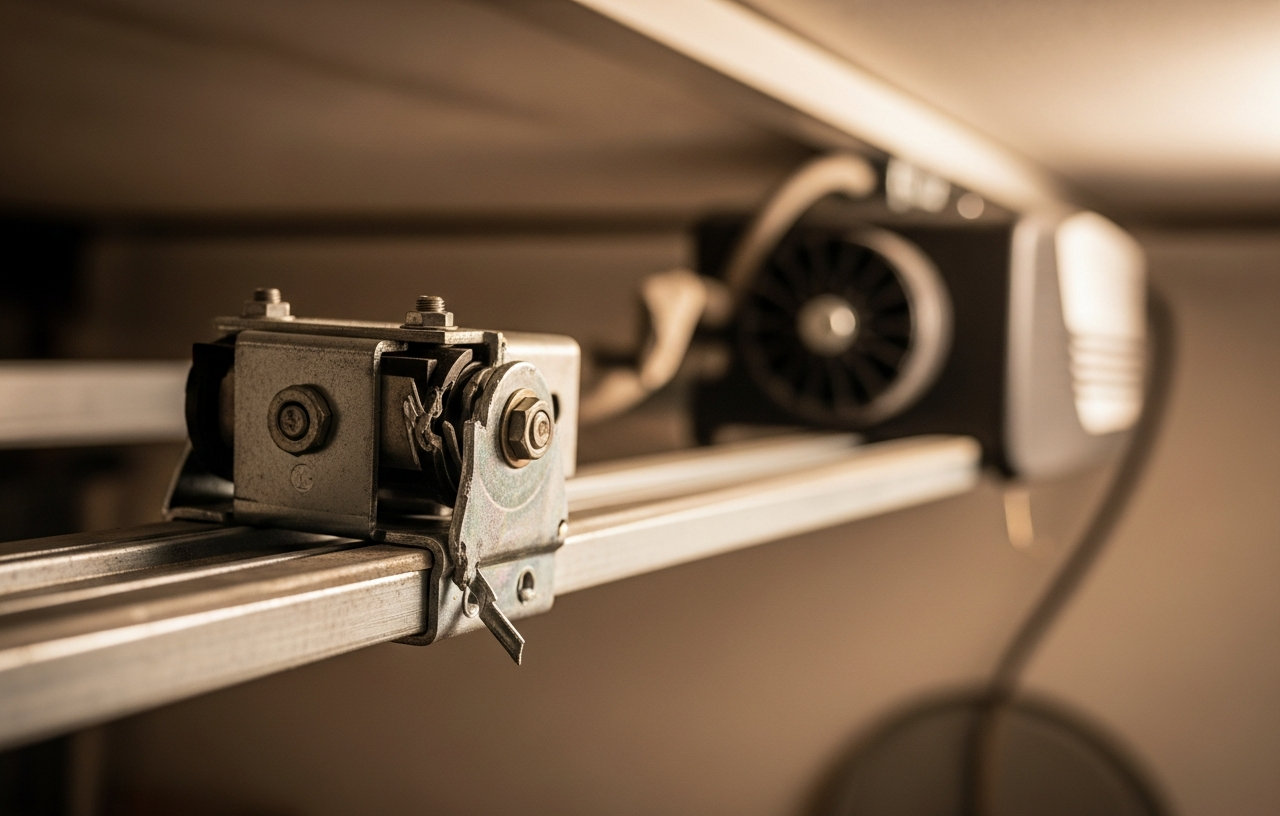
The trolley is a small but vital part of your garage door opener system. It's the component that travels along the opener's rail, attaching to the garage door itself via the emergency release cord and a J-arm. As the opener's motor engages the chain, belt, or screw drive, the trolley moves, transferring that force to lift or lower the door. Without a functioning trolley, the opener cannot physically move the garage door.
Most trolleys are made of durable plastic or metal. Over time, plastic trolleys can crack or break, especially under stress from an unbalanced door or worn springs. Metal trolleys are more robust but can still suffer damage from impact, rust, or consistent strain.
Symptoms of a Broken Garage Door Opener Trolley
Several clear signs suggest your garage door opener trolley might be broken. Paying attention to these symptoms can help you diagnose the problem quickly.
- Door Not Moving: The most obvious sign. The opener motor runs, but the door remains stationary. You might hear the chain or belt moving, but the trolley stays put or moves only slightly.
- Grinding or Clicking Noises: If the trolley is stripped or jammed, the gears in the opener may grind against the drive system, producing harsh sounds.
- Trolley Dislodged from Rail: The trolley may have jumped off the track or rail entirely. This often happens if the rail is bent or if the trolley assembly itself is damaged.
- Visible Damage: Inspect the trolley. Look for cracks, broken pieces, or a dislodged pin. The J-arm connecting it to the door might also be bent or broken at the connection point.
- Emergency Release Stuck or Not Working: While not a direct symptom of a broken trolley, a malfunctioning emergency release can sometimes be related to a trolley issue if the mechanism is integrated or if the trolley is jammed.
If your garage door isn't opening at all, and you suspect other issues beyond the trolley, you can review common fixes in our guide: Garage Door Opener Not Working: 9 Fixes Before You Call Anyone.
DIY Garage Door Opener Trolley Repair Costs
Repairing a broken trolley yourself is a manageable task for most homeowners with basic mechanical skills. The primary cost for DIY repair is the replacement part itself. The cost of a new trolley assembly typically ranges from $30 to $100.
Cost of Parts
- Online Retailers: Ordering a replacement trolley online usually offers the best prices, often between $30 and $70. Make sure you know your opener's brand and model number to get the correct part. Universal trolley kits are available, but a direct OEM (Original Equipment Manufacturer) replacement is often best for fit and longevity.
- Local Hardware Stores or Specialty Shops: You might find universal trolley kits or specific brand parts at a local hardware store, though selections can be limited. Prices here can be slightly higher, ranging from $40 to $100. The advantage is immediate availability.
Tools Needed for DIY Repair
You will generally need only a few common tools:
- Wrenches or a socket set
- Screwdrivers (Phillips and flathead)
- Pliers
- Work gloves
- A sturdy ladder
When DIY Makes Financial Sense
DIY repair is a smart financial choice if:
- You have experience with basic home repairs.
- The trolley is clearly broken, and no other major components are damaged.
- You can easily access the opener and rail.
- You have the time to research and complete the repair safely.
Always disconnect power to the garage door opener before starting any work. The garage door springs are under extreme tension. Never attempt to adjust or repair garage door springs yourself. If you suspect spring issues, call a professional. You can read more about what to do if you have a Broken Garage Door Spring.
Professional Garage Door Opener Trolley Repair Costs
Hiring a professional ensures the repair is done correctly and safely, especially if you are uncomfortable with DIY tasks or suspect more complex problems. Professional repair costs include a service call fee and labor charges.
Service Call Fees
Most garage door technicians charge a service call fee, which covers their travel to your home and initial diagnosis. This fee typically ranges from $80 to $150. Some companies may waive this fee if you proceed with the repair.
Labor Costs
Labor for a trolley replacement usually takes 1 to 2 hours. Technician hourly rates vary by region, but you can expect to pay between $75 and $120 per hour. The total labor cost for a trolley repair would therefore be $75 to $240.
Total Professional Repair Cost
This range accounts for variations in part prices, technician rates, and geographical location.
When to Call a Professional
It is best to hire a professional if:
- You are unsure about diagnosing the problem.
- You lack the necessary tools or experience for the repair.
- The trolley damage seems to be a symptom of a larger, more complex opener issue.
- You are concerned about working with potentially dangerous components like garage door springs.
- You want the repair done quickly and with a warranty on parts and labor.
Factors Affecting Repair Cost
Several specific conditions can influence the final cost of repairing your garage door opener trolley.
Opener Brand and Model
The brand and model of your garage door opener can impact part availability and cost. Common brands like LiftMaster, Chamberlain, and Genie usually have readily available parts. Obscure or older models might require special ordering, which can increase the part price and potentially add shipping delays.
Type of Drive System
Garage door openers use different drive systems: chain, belt, or screw. While the trolley's function is similar across all types, the specific design of the trolley assembly can vary. Chain drive trolleys might differ from belt drive trolleys. Screw drive openers have a unique carriage system that functions like a trolley, and these parts can sometimes be more specialized and slightly more expensive.
Geographical Location
Labor rates for garage door technicians vary significantly by region. Homeowners in major metropolitan areas or regions with a higher cost of living will generally pay more for professional services than those in rural areas.
Emergency vs. Scheduled Repair
If your garage door breaks on a weekend, holiday, or late at night, many repair companies charge an emergency or after-hours fee. This can add $50 to $150 to the total cost. Scheduling a repair during regular business hours is always more economical.
When to Consider Replacing the Entire Opener
Sometimes, repairing the trolley is not the most cost effective solution. Consider replacing your entire garage door opener if:
- Age of the Opener: Most garage door openers have a lifespan of 10 to 15 years. If your opener is approaching or past this age, other components may start failing soon. Investing in a new opener can provide better reliability and often includes modern safety features.
- Multiple Failing Components: If your trolley broke, and you also have issues with the motor, circuit board, or safety sensors, the combined repair cost can approach or exceed the cost of a new opener. In such cases, a full replacement offers better value.
- Repair Cost vs. New Opener Cost: If the estimated repair cost for the trolley and any other issues is more than 50% of the price of a new opener, replacement is usually the smarter long term decision.
If you are considering a full opener replacement, understanding the long term costs of major components can help you decide. See our article on .
Preventative Maintenance for Your Garage Door Opener Trolley
Regular maintenance can extend the life of your garage door opener and its trolley, potentially saving you from costly repairs.
- Lubrication: Periodically lubricate the opener's rail, chain, or screw drive according to the manufacturer's recommendations. Use a silicone-based or lithium grease spray designed for garage doors. This reduces friction and strain on the trolley.
- Inspect the Trolley: Every few months, visually inspect the trolley for any signs of wear, cracks, or misalignment. Make sure the pin connecting it to the J-arm is secure.
- Check Door Balance: An unbalanced garage door puts excessive strain on the opener and trolley. Disconnect the opener by pulling the emergency release cord and manually lift the door. It should stay put when lifted halfway. If it sags or shoots up, the springs need adjustment by a professional.
- Tighten Fasteners: Vibration can loosen bolts and screws over time. Periodically check and tighten all fasteners on the opener, rail, and trolley assembly.