A garage door opener that groans, squeals, or simply fails to lift a heavy door often points to the underlying drive system. Each type of garage door opener operates differently, offering unique benefits and drawbacks in terms of noise, speed, durability, and cost. Identifying your opener type is the first step toward effective troubleshooting or making an informed replacement decision.
Understanding Garage Door Opener Systems
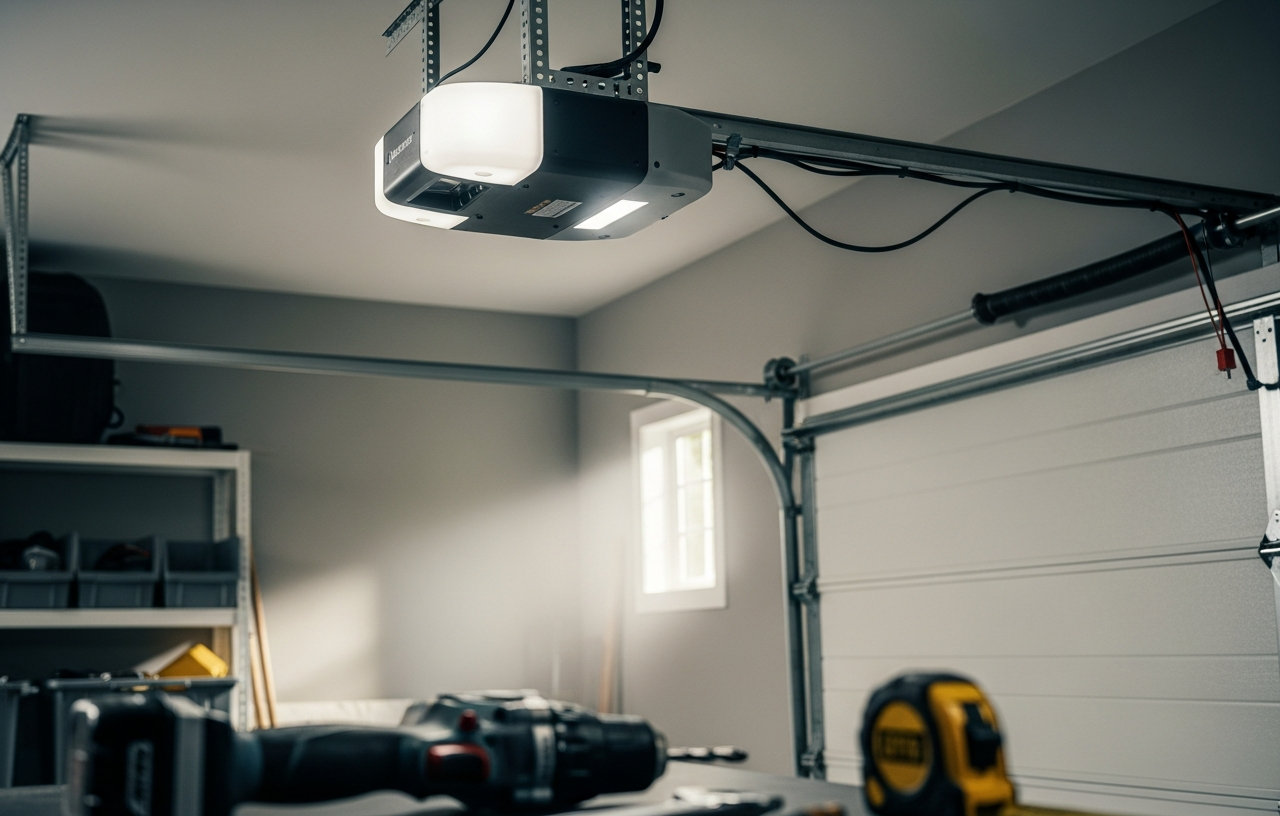
At its core, a garage door opener consists of a motor, a drive system, a rail, and a trolley. The motor powers the drive system, which moves the trolley along the rail, pulling the garage door up or pushing it down. Safety features, like photoelectric sensors, make sure the path is clear before the door closes fully. The drive system is where the primary differences between opener types lie.
Chain Drive Garage Door Openers
Chain drive openers are the most common and oldest type of garage door opener. They operate using a metal chain, similar to a bicycle chain, that pulls or pushes a trolley along a rail. This trolley is connected to the garage door, moving it up and down.
Mechanism and Operation
- A motor engages a sprocket, which in turn moves a continuous loop of chain.
- The chain is attached to a trolley, which slides along a stationary track.
- The trolley connects to the door arm, lifting or lowering the door.
Pros and Cons
- Pros: Known for their strength and durability, chain drives are excellent for heavy, oversized garage doors. They are typically the most affordable option upfront.
- Cons: Chain drive openers are notably noisy. The metal-on-metal operation can produce significant rattling and grinding sounds, which can be an issue for garages attached to living spaces. They also require periodic lubrication to keep the chain moving smoothly and to reduce noise. For solutions to common noises, see our article on Garage Door Opener Grinding Noise: Causes and Fixes.
Cost Considerations
A new chain drive opener typically costs between $150 and $300 for the unit itself. Replacing a chain drive motor might cost $200-$400 in parts alone, plus $150-$300 for labor, totaling $350-$700.
Belt Drive Garage Door Openers
Belt drive openers are a modern alternative to chain drives, designed for quieter operation. Instead of a metal chain, they use a rubber belt, often reinforced with steel, to move the trolley.
Mechanism and Operation
- A motor rotates a pulley, which moves a sturdy rubber belt.
- The belt is connected to a trolley, which glides along a rail.
- The trolley attaches to the door, facilitating its movement.
Pros and Cons
- Pros: The primary advantage of belt drive openers is their quiet operation. The rubber belt significantly reduces noise and vibration compared to a chain, making them ideal for homes with attached garages or living spaces directly above the garage. They also offer smooth and reliable performance.
- Cons: Belt drive openers are generally more expensive than chain drives. While durable, the rubber belt can stretch over many years, potentially requiring adjustment or replacement.
Cost Considerations
Expect to pay $200-$500 for a belt drive opener unit. This higher initial investment is offset by the quieter operation and smoother performance. For guidance on selecting the right opener, refer to How to Choose a Garage Door Opener: Your Ultimate Guide.
Screw Drive Garage Door Openers
Screw drive openers use a threaded steel rod to move the garage door. The motor rotates the rod, and a trolley with matching threads moves along it.
Mechanism and Operation
- A motor spins a long, threaded steel rod that runs the length of the opener rail.
- A trolley with internal threads engages the rod.
- As the rod rotates, the trolley travels along it, pulling or pushing the door.
Pros and Cons
- Pros: Screw drive openers have fewer moving parts than chain or belt drives, which can mean less maintenance. They are often fast in operation.
- Cons: These openers can be quite noisy, especially as they age, and their performance can be sensitive to temperature fluctuations. They may not be as suitable for very heavy or oversized doors compared to chain drives. Lubrication of the screw drive is critical for smooth operation and longevity.
Cost Considerations
Installation brings the total to $380-$800. Maintenance is generally low, but if the screw mechanism wears, repair can be complex.
Direct Drive Garage Door Openers
Direct drive openers represent a more innovative approach, where the motor itself moves along a stationary chain embedded in the rail.
Mechanism and Operation
- The motor is housed within the trolley itself, directly engaging a stationary chain or rail.
- The motor moves along the rail, pulling the door with it.
Pros and Cons
- Pros: These are arguably the quietest garage door openers available. With the motor moving directly, there are very few moving parts to create friction or noise. They are highly efficient and reliable.
- Cons: Direct drive openers are typically the most expensive type on the market. They are also offered by fewer manufacturers, limiting brand choice.
Cost Considerations
A direct drive opener unit might cost $300-$600.
Jackshaft Garage Door Openers
Jackshaft openers differ significantly from the others because they do not use a traditional overhead rail system. Instead, they mount on the wall next to the garage door's torsion spring shaft.
Mechanism and Operation
- The opener motor directly connects to the torsion spring shaft.
- It rotates the shaft, which in turn lifts or lowers the garage door via the torsion springs and cables.
- A separate cable tension monitor and safety sensor system are still in place.
Pros and Cons
- Pros: Jackshaft openers are excellent for garages with limited overhead space, very high ceilings, or obstructions that prevent a traditional rail system. They free up ceiling space, allowing for overhead storage. They are also very quiet and aesthetically pleasing due to their discreet wall-mount design.
- Cons: These are generally the most expensive type of opener. They also require specific garage door configurations, specifically a torsion spring system with adequate side room. Learn more about these specialized openers in our guide to Best Jackshaft Garage Door Openers for Low-Clearance Garages.
Cost Considerations
Jackshaft openers can range from $350-$800 for the unit. Installation, which can be more complex due to wiring and mounting requirements, might cost $250-$500.
Distinguishing Garage Door Opener Types from Garage Door Types
The opener refers to the mechanism that moves the door. The garage door type refers to its construction and how it opens.
Common Garage Door Types
While this article focuses on openers, understanding your door type can also be helpful. Some common garage door types include:
- Sectional Doors: The most common type, made of several horizontal panels that bend and roll up on tracks.
- Roll-Up Doors: Primarily used in commercial settings, these doors coil into a compact roll above the opening.
- Tilt-Up/One-Piece Doors: These doors pivot outward and up in one solid piece.
- Slide-to-Side Doors: Less common, these doors move horizontally along a track.
Most opener types can operate any of these door styles, provided the opener has sufficient horsepower for the door's weight. A 1/2 horsepower (HP) opener is generally sufficient for a single garage door, while a 3/4 HP or 1 HP opener is better for heavier double doors or custom wood doors.
Factors to Consider When Choosing an Opener
Selecting the correct garage door opener involves more than just price. Consider these factors:
- Noise Level: If your garage is attached to living spaces, a belt drive or direct drive opener provides quieter operation.
- Budget: Chain drives offer the most economical solution, while belt and jackshaft openers are at the higher end.
- Door Weight and Size: Heavier doors require more powerful openers. Make sure the opener's horsepower rating matches your door.
- Available Space: Jackshaft openers are ideal for garages with limited overhead clearance.
- Smart Features: Many modern openers integrate with smart home systems, allowing for remote access and monitoring. Explore options like those discussed in .
Troubleshooting Common Opener Issues
Regardless of the opener type, some problems are universal. If your garage door opener is not working, common culprits include power issues, misaligned safety sensors, or remote control problems. Before calling a technician, you can often resolve these issues yourself. Our guide, Garage Door Opener Not Working: 9 Fixes Before You Call Anyone, offers detailed steps for diagnosis and repair. Misaligned sensors are a frequent cause of a door not closing, which you can fix with instructions from Garage Door Sensor Not Working? Align and Fix It in 10 Minutes.
Professional Installation and Repair Costs
When DIY solutions are not enough, professional help is necessary. A typical service call for a garage door technician runs $80-$150, which often includes a diagnostic fee. Full opener installation can range from $200-$600, depending on the opener type, complexity of the job, and your location. If your opener issues stem from broken springs, be aware of the , as this is a separate and often more costly repair.
Understanding the different types of garage door openers empowers you to make better choices for your home. Whether you prioritize quiet operation, raw power, or space-saving design, there is an opener type suited to your specific needs.