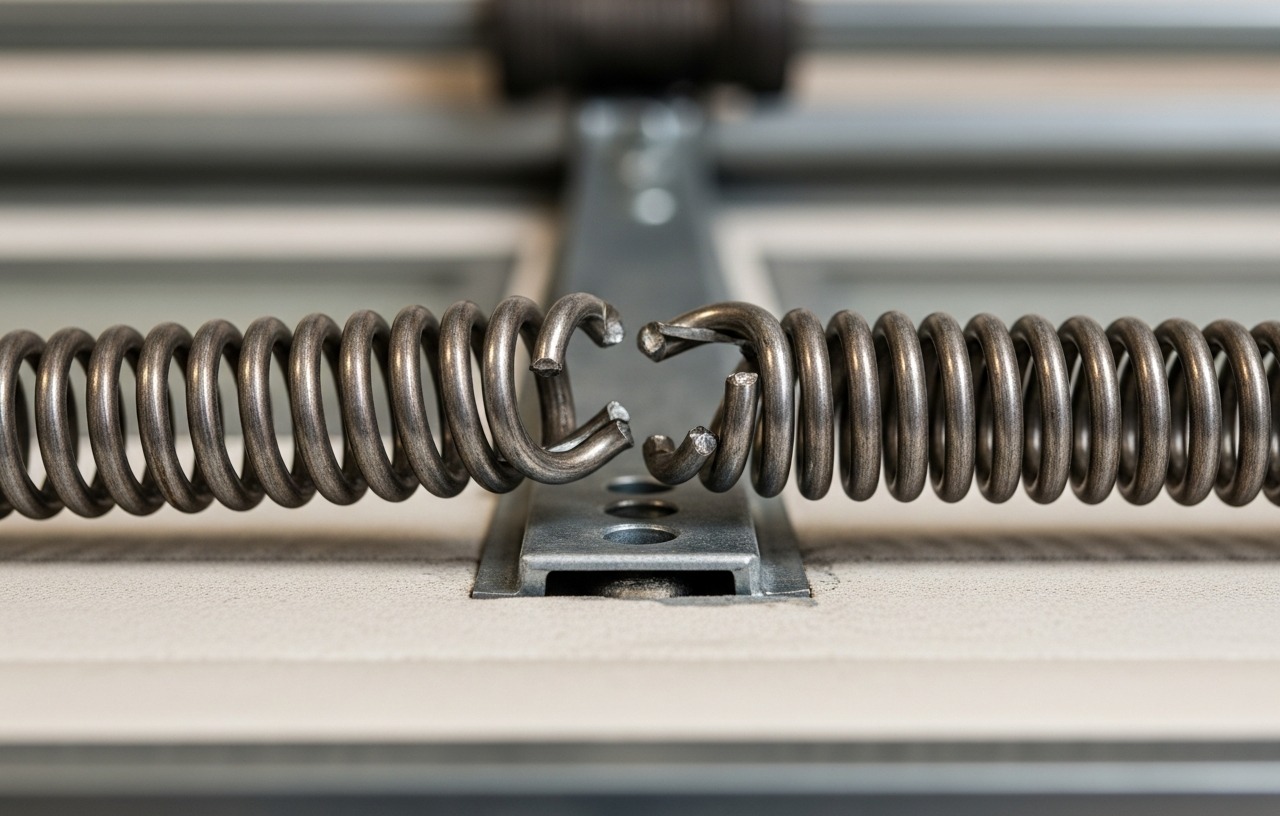
A garage door spring's color code provides a quick visual cue for its specifications, primarily wire gauge, but it is never the sole factor for correct spring selection. Relying only on color can lead to choosing the wrong spring, which compromises door balance and safety. Correct spring identification requires precise measurements of wire diameter, inside diameter, and length, in addition to considering the door's weight.
The Basics of Garage Door Spring Systems
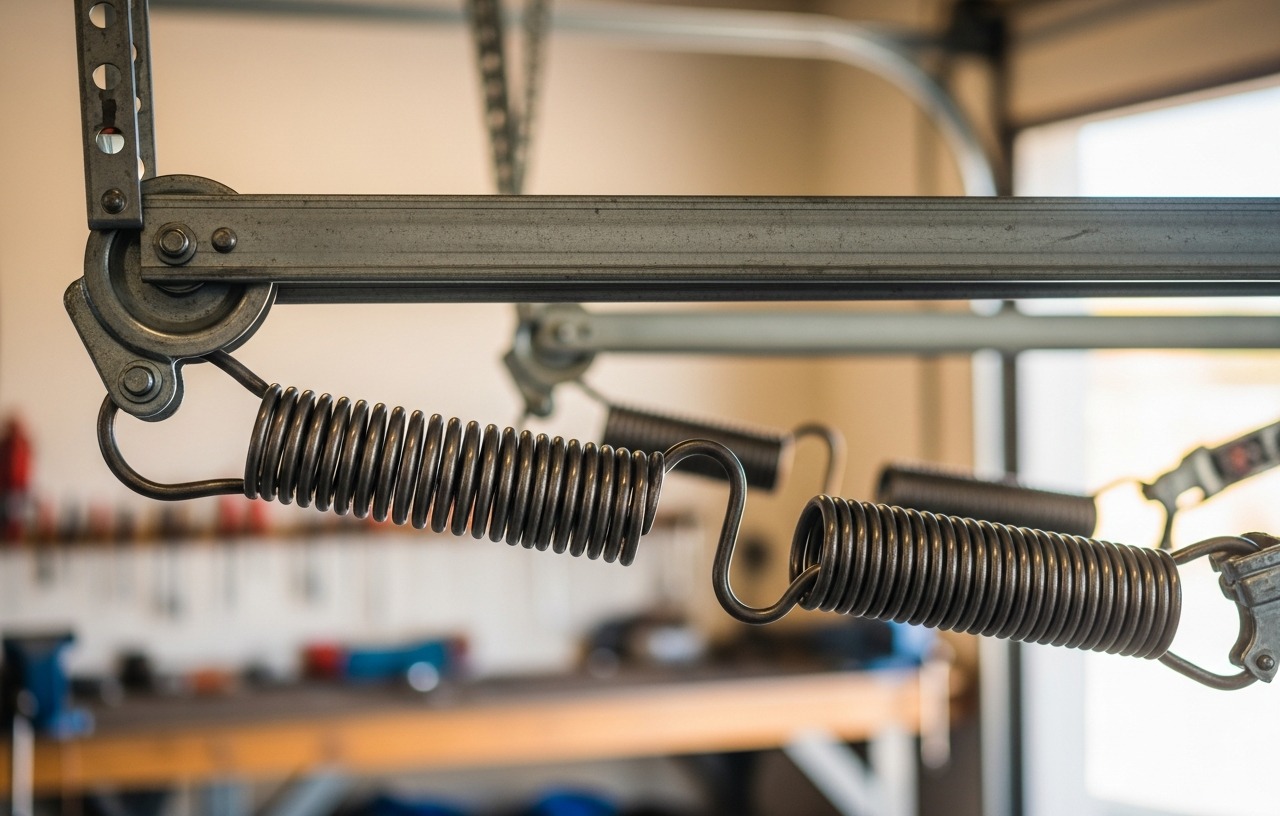
Garage doors use one of two main spring systems: torsion springs or extension springs. Each system employs springs differently and, consequently, uses color codes for different purposes. Torsion springs mount horizontally above the garage door opening. They twist as the door moves, storing energy. Extension springs, on the other hand, run parallel to the horizontal tracks on either side of the door. They stretch and contract, providing lift assistance. Both types are under extreme tension and can be dangerous if mishandled.
Understanding Torsion Spring Color Codes
Torsion spring color codes primarily indicate the wire gauge, or the thickness of the spring wire. Manufacturers often paint a stripe or the entire spring body a specific color. This color corresponds to a standardized wire diameter. However, these codes are not universal across all manufacturers. A red stripe from one brand might signify a different wire gauge than a red stripe from another.
Common wire gauges for residential torsion springs include .207, .218, .225, .234, .243, .250, and .262 inches. A typical coding system might assign red to a .207 wire, white to a .218 wire, green to a .225 wire, and so on. For instance, a spring with a .207 wire diameter might be painted red. A spring with a .225 wire might be painted green. Some systems use two colors, where one color indicates the base wire size and a second stripe indicates a finer increment or a specific spring length within that wire size range. Always measure the spring to confirm its specifications.
How to Measure Torsion Springs
To accurately identify a torsion spring, measure three key dimensions:
- Wire Diameter: Use a caliper to measure 10 to 20 coils. Count the number of coils and divide the total length of those coils by the count. For example, if 20 coils measure 4.5 inches, the wire diameter is 4.5 / 20 = .225 inches.
- Inside Diameter (ID): Measure the inside diameter of the spring coils. Common IDs are 1.75 inches, 2.0 inches, 2.25 inches, or 2.75 inches.
- Length: Measure the spring's total length from end to end when it is unwound. Common lengths range from 20 to 40 inches for a single spring.
These three measurements, along with the door's weight, are critical for ordering the correct replacement spring. You can find more detailed instructions on replacing torsion springs, including safety precautions, in our guide DIY Torsion Spring Replacement: No Torsion Tube Removal Needed.
Interpreting Extension Spring Color Codes
These springs are typically painted a solid color over their entire body. The general rule is that each color represents a 10-pound increment of door weight. For example, a spring for a 90-pound door might be yellow, a 100-pound door might be white, and a 110-pound door might be green.
Here is a common, though not universally binding, color code chart for extension springs:
- Light Blue: 40 pounds
- Green: 50 pounds
- Brown: 60 pounds
- Orange: 70 pounds
- Tan: 80 pounds
- Yellow: 90 pounds
- White: 100 pounds
- Light Green: 110 pounds
- Red: 120 pounds
- Blue: 130 pounds
- Gold: 140 pounds
- Dark Brown: 150 pounds
- Silver: 160 pounds
- White (with purple stripe): 170 pounds
- Yellow (with blue stripe): 180 pounds
- Light blue (with red stripe): 190 pounds
- Red (with white stripe): 200 pounds
If your garage door uses two extension springs, which is common for doors weighing more than 100 pounds, each spring supports half of the door's weight. So, a red spring rated for 120 pounds would support a 60-pound portion of the door. Two red springs would balance a 120-pound door. This system ensures proper balance and prevents undue stress on the garage door opener.
How to Measure Extension Springs
Measuring extension springs also requires precision:
- Wire Diameter: Use calipers to measure the wire thickness.
- Inside Diameter (ID): Measure the inside diameter of the spring.
- Length: Measure the spring's total length from end to end, including the hooks, when it is unextended. Common lengths include 25, 27, 28, 30, and 32 inches.
- Stretch: Note the spring's maximum stretch length. A 30-inch spring for a 7-foot high door will typically stretch to 67 inches. For more information on extension springs, refer to our article Understanding Garage Door Extension Springs: Function and Lifespan.
Why Accurate Spring Identification Matters
Using the wrong spring can lead to several problems. An undersized spring will force your garage door opener to work harder, shortening its lifespan. It can also cause the door to fall quickly or not open fully. An oversized spring can cause the door to fly open rapidly, potentially damaging the tracks or the door itself. It also makes the door difficult to close. Proper spring selection ensures the door is balanced, meaning it stays in place when manually lifted halfway.
The correct spring balances the door perfectly, allowing it to move smoothly and safely with minimal effort from the opener or by hand. This balance extends the life of all components, including the opener motor and cables.
Safety Considerations for Spring Replacement
Garage door springs are under extreme tension. A broken spring can cause the door to become extremely heavy and difficult to lift. Attempting to replace springs without proper tools and knowledge can result in severe injury. If your garage door spring breaks, it is advisable to contact a professional. A technician will have the specialized tools and training to safely remove and install new springs. For guidance on immediate steps after a spring breaks, read Broken Garage Door Spring: What to Do Right Now (And What Not To).
If you suspect a broken spring or your garage door is not opening correctly, do not attempt to force it open. This can worsen the damage and create a dangerous situation. Costs for extension springs are often slightly less. This investment covers the specialized labor and ensures the repair is done safely and correctly.
Conclusion
Garage door spring color codes offer a helpful starting point for identifying spring types and specifications. However, they are not a substitute for accurate physical measurements. Always measure the wire diameter, inside diameter, and length of your springs to ensure you select the correct replacements. Given the inherent dangers of working with high-tension springs, consider hiring a qualified professional for spring replacement to ensure safety and proper door operation.