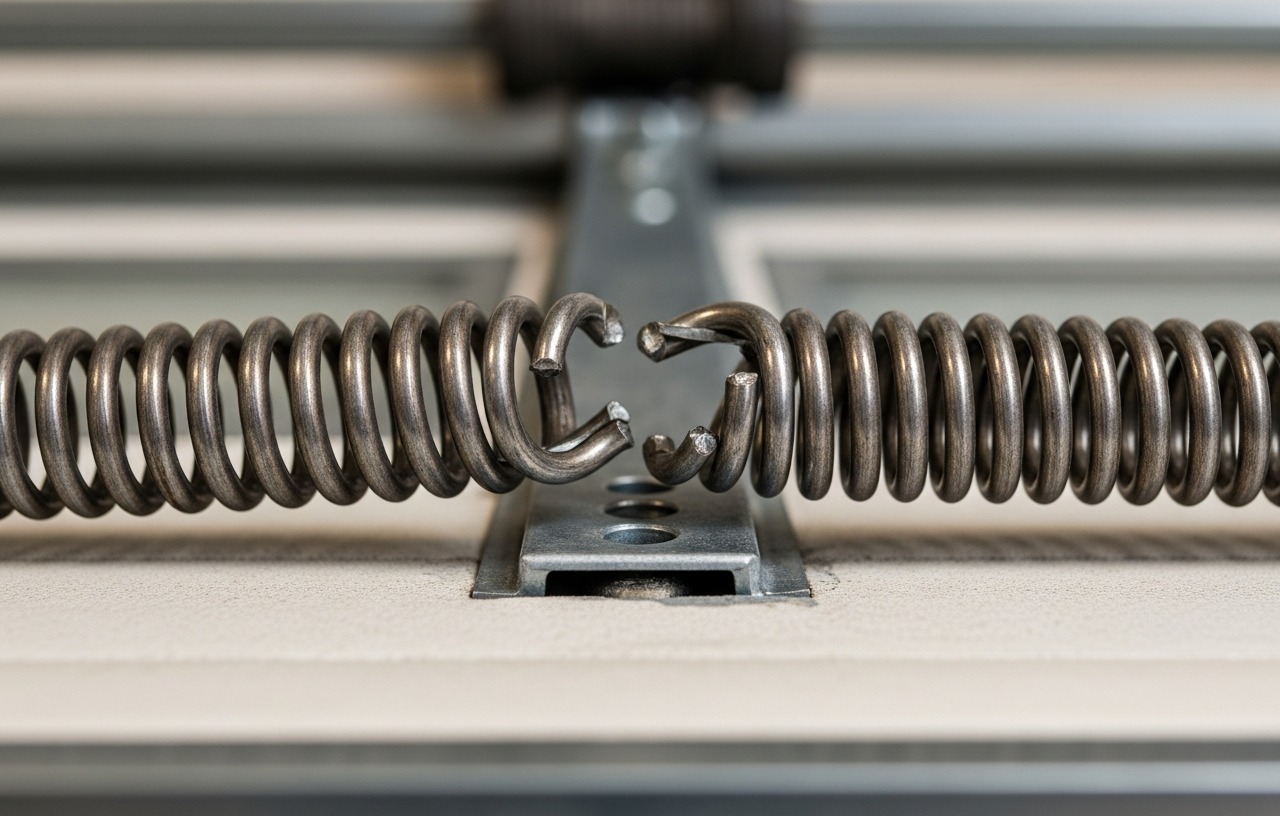
A loud, sharp snap from your garage indicates a broken spring. This often leaves your garage door heavy, difficult to open, or completely stuck. Replacing a single torsion spring can cost as little as $40-$100 for the part if you perform the repair yourself. Professional installation for a single torsion spring typically ranges from $200-$400, including parts and labor.
Understanding the actual costs involves considering spring type, labor rates, and your comfort level with a potentially dangerous DIY project. This article breaks down those expenses to help you make an informed decision.
Understanding Garage Door Springs and Why They Break
Garage doors rely on springs to counterbalance their significant weight. Without functional springs, the door opener struggles, or the door becomes impossible to lift manually. Two main types of springs are used: torsion springs and extension springs.
Torsion Springs
Torsion springs mount horizontally on a metal shaft directly above the garage door opening. They twist and coil as the door moves, storing immense rotational energy. These springs are under extreme tension. They are generally considered more durable and safer than extension springs because their energy is contained on the shaft.
Extension Springs
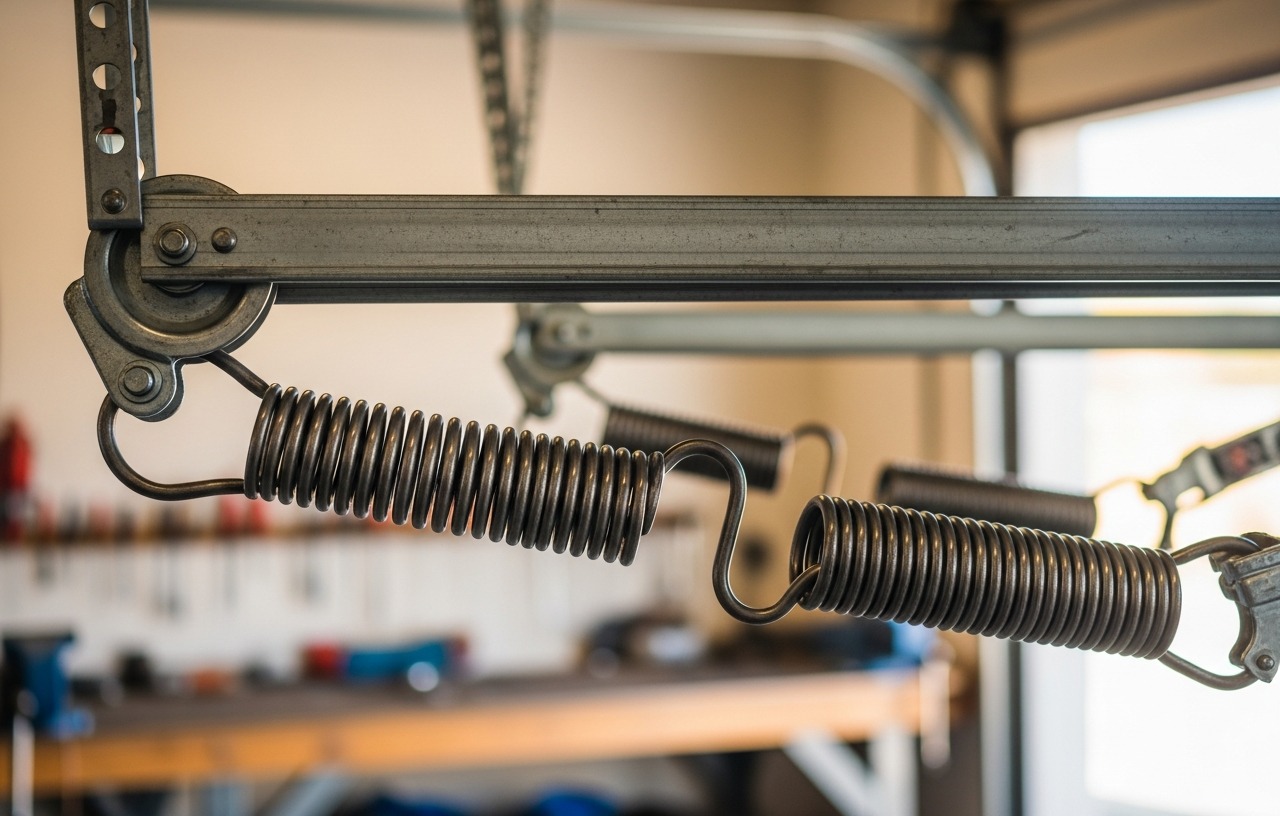
Extension springs run parallel to the horizontal tracks on either side of the garage door. They stretch and contract to counterbalance the door's weight. When an extension spring breaks, it can snap violently, posing a significant safety hazard. Safety cables are essential with extension springs to prevent dangerous projectiles if a spring fails.
Why Springs Fail
Springs typically break due to metal fatigue. Each time the garage door opens and closes, the springs flex. Manufacturers rate springs for a certain number of cycles, commonly 10,000 cycles. A cycle is one open and one close. For a household opening their garage door four times a day, springs may last 7-10 years. Corrosion, improper installation, or manufacturing defects can also shorten a spring's lifespan. If you hear a loud noise and your garage door suddenly feels much heavier, it is likely a broken spring. For immediate safety steps, consult Broken Garage Door Spring: What to Do Right Now (And What Not To).
Replacing a garage door spring yourself offers substantial savings on labor. However, it requires specific tools, mechanical aptitude, and a clear understanding of the severe safety risks involved.
DIY Part Costs
- Torsion Spring: A single replacement torsion spring typically costs $40-$100 when ordered online. Hardware stores may charge $60-$150, but selection can be limited. The price depends on the spring's size, wire gauge, and length, which must precisely match your existing spring and door weight.
- Extension Spring: Individual extension springs usually cost $30-$70 online, or $50-$100 at a local hardware store. Most extension spring systems use two springs, so you would need to purchase a pair, bringing the part cost to $60-$140 online or $100-$200 from a store.
Accurately measuring your broken spring for its inside diameter, wire size, and length is critical for ordering the correct replacement. Using the wrong spring can lead to poor door balance, premature failure, and safety issues.
Essential Tools for DIY
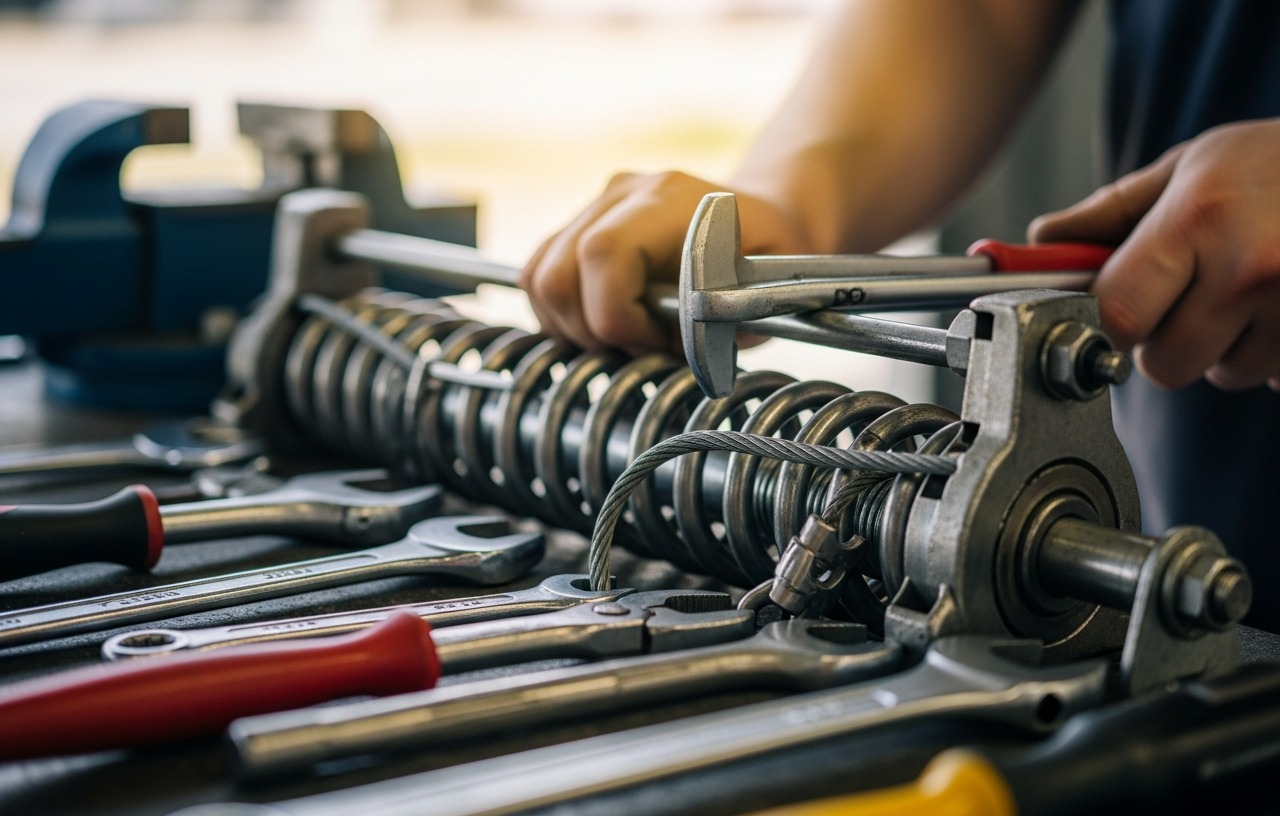
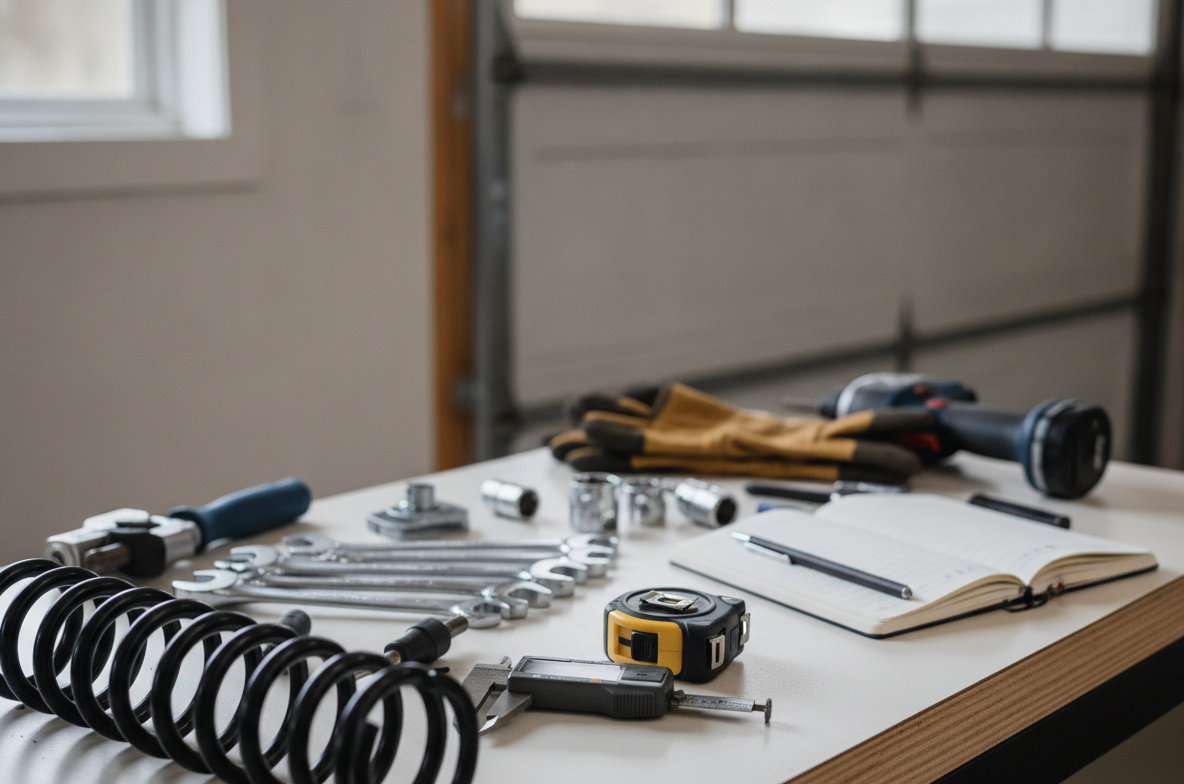
For torsion springs, the most critical tools are winding bars. These specialized rods are used to safely tension the spring. A set of two winding bars typically costs $20-$40. Other tools you will need include:
- Socket wrench set
- Adjustable wrench
- Vice grips or C-clamps
- Sturdy ladder
- Safety glasses and gloves
The total investment for tools, especially winding bars, is usually less than the labor cost of a professional. If you plan to tackle a torsion spring replacement, you can find a detailed guide at DIY Torsion Spring Replacement: No Torsion Tube Removal Needed.
Time Commitment for DIY
An experienced DIYer might replace a single torsion spring in 1-2 hours. Someone new to the task could take 2-4 hours. Extension springs can sometimes be quicker, perhaps 1-2 hours for a pair, but the process still involves significant safety considerations.
Professionals also carry insurance, which is important given the inherent dangers of spring replacement.
Service Call Fees and Labor
Most garage door companies charge a service call fee, typically $80-$150. This fee often covers the diagnostic visit and may be waived or applied to the total repair cost if you proceed with their service. Labor rates for spring replacement generally range from $75-$150 per hour.
Most spring replacements take 1-2 hours. Some technicians offer a flat rate per spring, which can be advantageous if unexpected issues arise during the repair.
Professional Parts Markup
Technicians usually source high quality springs directly from suppliers. They will include a markup on the spring itself, which covers their acquisition costs, inventory, and warranty. This means the part cost from a professional will be higher than buying it yourself online.
Total Professional Cost Estimates for 2026
- Single Torsion Spring: Expect to pay $200-$400. This includes the service call, labor for 1-2 hours, and the cost of the spring.
- Double Torsion Spring: For systems with two torsion springs, the cost typically ranges from $300-$600. Professionals often recommend replacing both springs at once, even if only one is broken, as the other is likely to fail soon.
- Extension Springs (Pair): Replacing a pair of extension springs usually costs $250-$500. This estimate includes the springs, safety cables, and labor.
These figures can vary based on your geographic location. Metropolitan areas often have higher labor rates than rural ones. Emergency service outside of regular business hours will also incur higher fees.
When to DIY vs. When to Call a Pro
Deciding between DIY and professional service depends on several factors: your mechanical skill, comfort with risk, and the specific type of spring system.
DIY Is Feasible If:
- You have a single torsion spring system.
- You are comfortable with hands-on mechanical tasks and following detailed instructions.
- You own or are willing to purchase the correct winding bars and other necessary tools.
- You understand the extreme danger of working with high-tension springs and prioritize safety above all else, taking every precaution.
DIY spring replacement can save you $100-$300 on labor costs. It is a rewarding project for those with the right skills and mindset.
Call a Professional If:
- You have extension springs. These springs store energy differently and can be more unpredictable and dangerous to replace for an amateur.
- Your garage door uses a double torsion spring system. Balancing two springs correctly requires precision and experience.
- You lack confidence in your mechanical abilities or are uncomfortable working with high-tension components.
- You do not have the proper tools, especially winding bars for torsion springs.
- You prioritize safety and a warranty on parts and labor over cost savings.
- Your garage door is particularly heavy or unusually large, as these often require specialized springs and more robust equipment.
A professional technician has the experience to perform the repair safely and efficiently. They also make sure the door is properly balanced after the spring replacement, which extends the life of the opener and other components. If your garage door opener is not working, even after checking the springs, you might find solutions in Garage Door Opener Not Working: 9 Fixes Before You Call Anyone.
Factors Affecting the Overall Garage Door Spring Replacement Cost
Several conditions influence the final price you pay for spring replacement, whether DIY or professional:
- Type of Spring: Torsion springs generally cost more per part than extension springs due to their heavier construction.
- Number of Springs: Most residential doors use one or two torsion springs, or a pair of extension springs. Replacing two springs naturally costs more than one.
- Spring Size and Weight Capacity: Heavier or larger garage doors require stronger, often more expensive, springs. The cost difference between springs for a single-car garage and a heavy, insulated double-car garage can be significant.
- Location: Labor costs vary by region. Technicians in areas with a higher cost of living typically charge more.
- Emergency Service: Calling a technician for an urgent repair outside of normal business hours, on weekends, or holidays will incur higher rates.
Avoiding Future Spring Breakage
While spring breakage is often inevitable due to wear and tear, some practices can extend their life:
- Regular Lubrication: Apply a silicone-based lubricant to the springs every few months. This reduces friction and prevents rust, allowing the springs to operate more smoothly.
- Proper Door Balance: A properly balanced door puts less stress on the springs and the opener. Test your door's balance by disconnecting the opener and manually lifting the door halfway. It should stay in place without assistance. If it drifts up or down, the springs may need adjustment or replacement.
- Spring Cycle Rating: When replacing springs, consider upgrading to high-cycle springs, which are rated for 20,000 or more cycles. This initial higher cost can save you money on future replacements.
Final Thoughts on Garage Door Spring Replacement Costs
A broken garage door spring is a significant inconvenience and a potential safety hazard. Understanding the garage door spring replacement cost estimator allows you to plan your repair budget effectively for 2026. DIY replacement offers considerable savings, with parts costing $40-$100 for a torsion spring, but demands careful attention to safety. Choose the option that best fits your budget, skill level, and safety considerations. Always prioritize safety when dealing with high-tension garage door components.