
Genie 19988A OEM Garage Door Opener Capacitor Replacement, By Fairbanks Electric
- Compatible with Most Genie 1/2 Horse Power Garage Door Openers - NOT Compatable with models GPS-1200.
- 70 MFD, 220 VAC, 60 Hz
- This is an OEM upgrade replacement part
- Fairbanks Electric Is A Registered Trademark

19988A Capacitor Compatible with Genie 1/2hp openers, 70 MFD 220 Vac 60 Hz Garage Door Opener Starting Capacitor Replacement for
- 19988A Garage Door Opener Motor Starting Capacitor Replacement compatible with Genie
- 19988A garage door opener capacitor is Compatible with All Genie 1/2 Horse Power Garage Door.
- 70 Microfarad (MFD), 220 Volts AC (VAC), 60 Hertz (Hz)
- It only took you about 30 minutes from start to finish. Inexpensive way to fix, saved the cost of a new motor.

50-60 uF MFD Garage Door Opener Capacitor Compatible for Genie 18004B
- Production Name: Garage door opener capacitor, volume: 50-60 mfd uF, Withstand Voltage: 250V AC,50/60 Hz.
- Compatible and fit for Genie 1/3 HP Garage Door Openers except models GPS-700 Stealth, PMX-700 Openers and.
- With quick connect terminals, it is very easy to install, save your time and energy
- The phenomena of garage door opener capacitor broken, is that door motor can not start and capacitor.
A garage door opener makes a clicking noise but the door does not move. This usually points to one of three common issues: a failed capacitor, broken garage door springs, or a stripped gear inside the opener motor. Less often, it could be misaligned safety sensors or a problem with the opener's logic board. Diagnosing the exact cause helps you determine if it is a simple DIY fix or if a professional technician is needed.
Understanding the source of the clicking sound when your garage door opener makes clicking noise is the first step toward a solution. Some causes are inexpensive to repair. Others require professional attention for safety and effectiveness.
Bad Capacitor: Clicking with No Motor Engagement
If your garage door opener makes a clicking noise but the motor does not engage or hum, a failing start capacitor is a very likely culprit. The capacitor provides the initial burst of electricity the motor needs to start its rotation. Without it, the motor receives power but cannot begin its movement. You will hear a clicking sound from the opener's relay trying to engage the motor.
How to Test for a Bad Capacitor
- Unplug the Opener: Always disconnect power to the garage door opener before inspecting components.
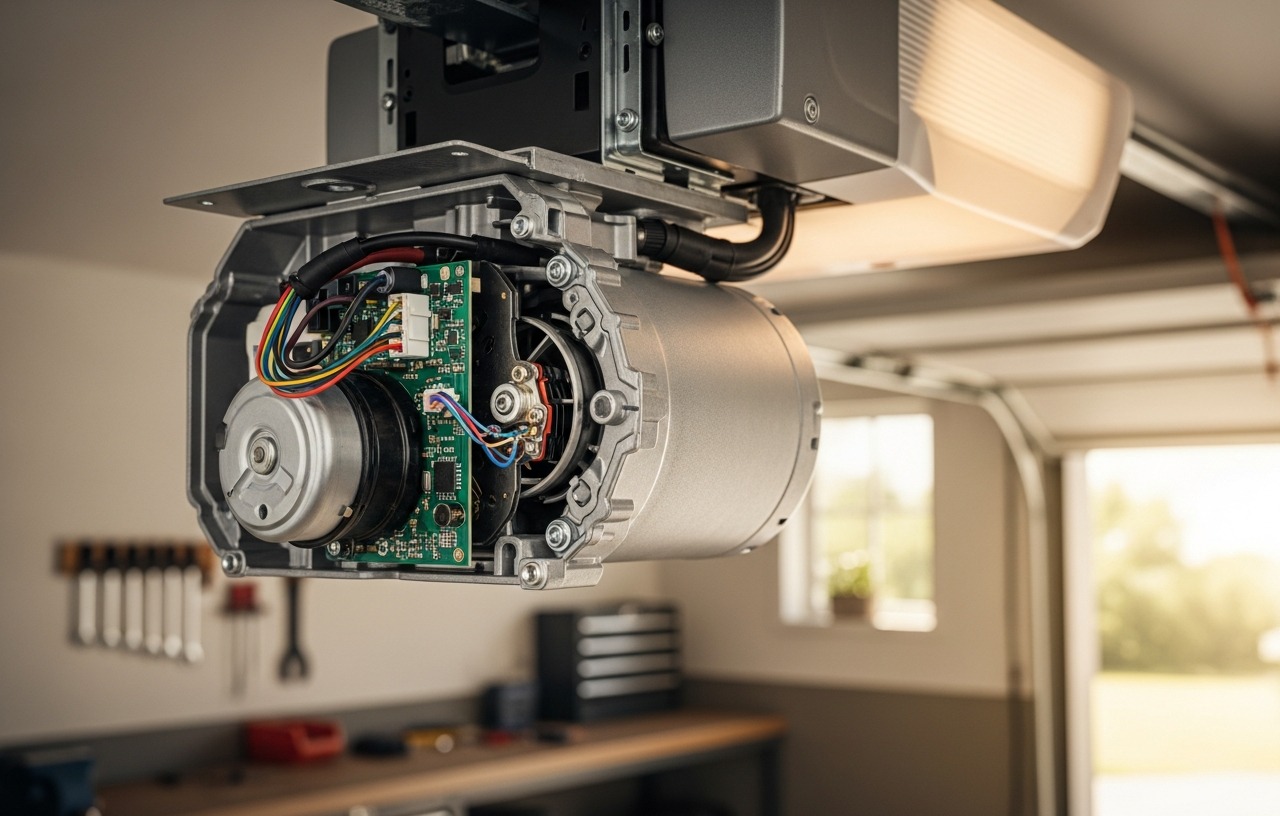
- Access the Capacitor: The capacitor is usually a cylindrical component located near the motor unit, often under a protective cover. It may be marked with its microfarad (MFD) and voltage ratings.
- Visual Inspection: Look for any bulging, leaks, or burn marks on the capacitor. These are clear signs of failure.
- Manual Door Test: With the opener unplugged, pull the emergency release cord. Try to open and close the garage door manually. If it feels extremely heavy or will not stay open, the issue is likely with the springs, not the capacitor. If it moves freely and stays in place, the motor is probably fine, pointing back to the capacitor or internal gears as the problem.
If you suspect the capacitor, replacing it is a relatively inexpensive DIY repair. For most Genie 1/2 horsepower openers (excluding models like GPS-1200), the Genie 19988A OEM Garage Door Opener Capacitor Replacement is a top pick for its compatibility and OEM quality. This component, rated 70 MFD, 220 VAC, 60 Hz, is an exact fit for many older units. Other compatible options include the 19988A Capacitor Compatible with Genie 1/2hp openers and the 50-60 uF MFD Garage Door Opener Capacitor Compatible for Genie 18004B for 1/3 HP models.
Repair Cost for a Bad Capacitor
The cost for a new capacitor ranges from $15 to $40 if you replace it yourself. If you hire a professional, expect to pay $80-$150 for a service call, plus the cost of the part and labor, totaling $100-$200.
Broken Garage Door Springs: Garage Door Makes Clicking Noise Won't Open
A garage door opener makes a clicking noise, but the door only moves a few inches, or not at all. This often indicates broken or severely worn garage door springs. The opener motor tries to lift the door, but without the spring assistance, it cannot overcome the door's immense weight. The clicking sound you hear might be the opener's internal overload protection engaging as it strains against the heavy door. This is a common reason for a garage door makes clicking noise won't open.
How to Check for Broken Springs
- Visual Inspection: Look at the springs above your garage door. Torsion springs run horizontally above the door opening. Extension springs run along the sides of the horizontal tracks. A broken torsion spring will have a visible gap in the coil. An extension spring will appear stretched out or disconnected.
- Manual Lift Test: With the opener unplugged and the emergency release cord pulled, try to lift the door manually. If it feels extremely heavy and difficult to lift, or if it crashes down when you let go, the springs are broken. A properly balanced garage door should feel relatively light and stay open when partially lifted.
Do not attempt to operate the opener with broken springs. This can cause further damage to the opener motor and can be dangerous. For more details on what to do, read our guide on Broken Garage Door Spring: What to Do Right Now.
Repair Cost for Broken Springs
Replacing garage door springs is a dangerous task best left to professionals due to the high tension involved. This includes parts and labor. You can learn more about the costs involved in our article, .
Stripped Gears: Garage Door Opener Makes Clicking Sound but No Movement
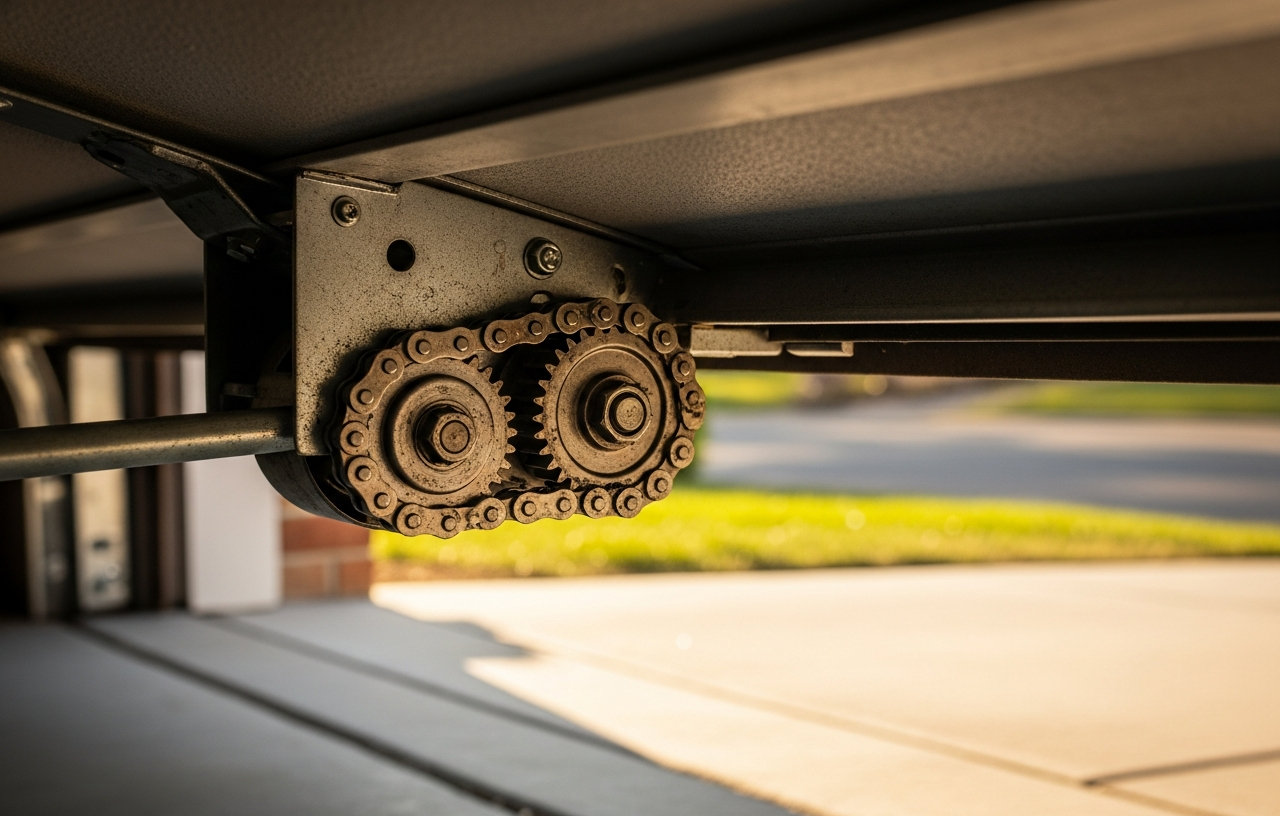
Another common reason a garage door opener makes a clicking sound but fails to move the door is a stripped gear inside the opener's drive unit. Many garage door openers use plastic gears designed to strip before the motor itself is damaged. This acts as a safety mechanism. When these gears are worn or broken, the motor spins freely, but it cannot transmit power to the chain or belt drive to lift the door. This results in a garage door opener makes clicking sound but no actual door movement.
How to Check for Stripped Gears
- Listen Carefully: Activate the opener. If you hear the motor running (a distinct whirring sound) but the chain or belt does not move, or moves erratically, stripped gears are likely. The clicking sound might be the motor trying to engage the stripped gear.
- Inspect the Drive Mechanism: Unplug the opener. Remove the cover of the opener motor unit. Carefully inspect the gears, especially the main drive gear that connects to the motor shaft and drives the chain or belt sprocket. Look for missing teeth, cracks, or excessive wear.
This is a more involved DIY repair, but replacement gear kits are available for many opener models. If you are comfortable with mechanical repairs, you might consider this option.
Repair Cost for Stripped Gears
A DIY gear replacement kit typically costs $20-$60. If you hire a professional, the repair will cost $150-$300, covering the service call, parts, and labor. This makes it a mid-range repair in terms of expense.
Safety Sensors: Garage Door Making Clicking Noise When Opening or Closing
Sometimes, a garage door opener makes a clicking noise and the door begins to close, then immediately reverses. Or, it might click and show an error code without any movement. This often points to issues with the safety sensors. These sensors, located at the bottom of the garage door tracks, create an invisible beam. If anything breaks this beam while the door is closing, the door stops and reverses to prevent accidents. This is a common cause if your garage door making clicking noise when opening or closing.
How to Check Safety Sensors
- Visual Obstruction Check: Look for anything blocking the path between the two sensors. This could be a leaf, a tool, or even spiderwebs. Remove any obstructions.
- Sensor Alignment: Each sensor has an indicator light. If a light is off or flickering, the sensors are likely misaligned. Gently adjust the sensors until both lights are solid.
- Wiring Inspection: Check the sensor wires for any damage, fraying, or loose connections.
If you suspect sensor issues, our articles Garage Door Sensor Not Working? Align and Fix It in 10 Minutes and How to Align Garage Door Sensors in 5 Minutes provide detailed instructions.
Repair Cost for Safety Sensors
Cleaning and realigning sensors is a free DIY fix. If a sensor unit or its wiring needs replacement, a new set of sensors costs $30-$70. Professional service for sensor issues typically falls within the $80-$180 range, including diagnosis and adjustment or replacement.
Logic Board or Limit Switches: Mysterious Clicking
A garage door opener making a clicking sound without any other clear symptoms can sometimes be traced to the opener's logic board or limit switches. The logic board is the 'brain' of the opener, controlling all its functions. A faulty relay on the logic board can produce a clicking sound as it attempts to send commands that never reach the motor. Limit switches tell the opener how far to open and close the door. If these are miscalibrated or faulty, the opener might click as it tries to move beyond its set limits or fails to recognize its current position.
How to Check for Logic Board or Limit Switch Issues
- Observe Opener Behavior: Does the clicking happen at the beginning of the cycle, during, or at the end? Does the door attempt to move at all? Note any error codes displayed on the opener unit.
- Reset Opener: Unplug the opener for a few minutes, then plug it back in. This can sometimes reset minor electronic glitches.
- Manual Movement Check: With the emergency release pulled, move the door manually. Make sure it glides smoothly. If it binds, the problem may be mechanical rather than electrical.
- Review Manual: Consult your opener's manual for specific troubleshooting steps related to error codes or clicking sounds. This often provides guidance on adjusting travel limits.
Diagnosing and replacing a logic board or working with limit switches can be complex. It is often best handled by a professional technician. For general troubleshooting, you might find our guide Garage Door Opener Not Working: 9 Fixes Before You Call Anyone helpful.
Repair Cost for Logic Board or Limit Switches
Replacing a logic board can be one of the more expensive repairs, with parts costing $80-$200 and professional installation adding $100-$250 in labor. A total repair could be $180-$450. Adjusting or replacing limit switches is usually less costly, ranging from $100-$250 for parts and labor.
Final Thoughts on Your Clicking Garage Door Opener
When your garage door opener makes a clicking noise, it is sending a signal that something is wrong. By systematically checking the capacitor, springs, gears, and safety sensors, you can often pinpoint the problem yourself. Remember to always prioritize safety by disconnecting power before any inspection or repair. If the issue remains elusive or involves complex components, calling a qualified garage door technician is a sensible next step. They can diagnose and safely fix the problem, restoring your garage door to proper operation.
Genie 19988A OEM Garage Door Opener Capacitor Replacement, By Fairbanks Electric
- Compatible with Most Genie 1/2 Horse Power Garage Door Openers - NOT Compatable with models GPS-1200.
- 70 MFD, 220 VAC, 60 Hz
- This is an OEM upgrade replacement part
- Fairbanks Electric Is A Registered Trademark
19988A Capacitor Compatible with Genie 1/2hp openers, 70 MFD 220 Vac 60 Hz Garage Door Opener Starting Capacitor Replacement for
- 19988A Garage Door Opener Motor Starting Capacitor Replacement compatible with Genie
- 19988A garage door opener capacitor is Compatible with All Genie 1/2 Horse Power Garage Door.
- 70 Microfarad (MFD), 220 Volts AC (VAC), 60 Hertz (Hz)
- It only took you about 30 minutes from start to finish. Inexpensive way to fix, saved the cost of a new motor.
50-60 uF MFD Garage Door Opener Capacitor Compatible for Genie 18004B
- Production Name: Garage door opener capacitor, volume: 50-60 mfd uF, Withstand Voltage: 250V AC,50/60 Hz.
- Compatible and fit for Genie 1/3 HP Garage Door Openers except models GPS-700 Stealth, PMX-700 Openers and.
- With quick connect terminals, it is very easy to install, save your time and energy
- The phenomena of garage door opener capacitor broken, is that door motor can not start and capacitor.