A garage door that suddenly feels incredibly heavy or will not open, even with the opener running, almost always indicates a broken spring. These springs are vital for counterbalancing the door's weight, allowing it to open and close smoothly. Without them, the garage door opener struggles or fails entirely, and manual operation becomes dangerous. Homeowners typically encounter two main types of garage door springs: torsion springs and extension springs. Each system operates differently and requires specific considerations for identification, maintenance, and replacement.
The Critical Role of Garage Door Springs
Garage door springs manage the significant weight of the door itself. A standard two-car garage door can weigh between 150 and 300 pounds. Without the springs, the opener would bear this entire load, leading to rapid wear and failure. The springs store mechanical energy when the door closes and release it when the door opens, effectively making the door feel much lighter. This counterbalance system is essential for both manual and automatic operation.
Spring Lifespan and Failure
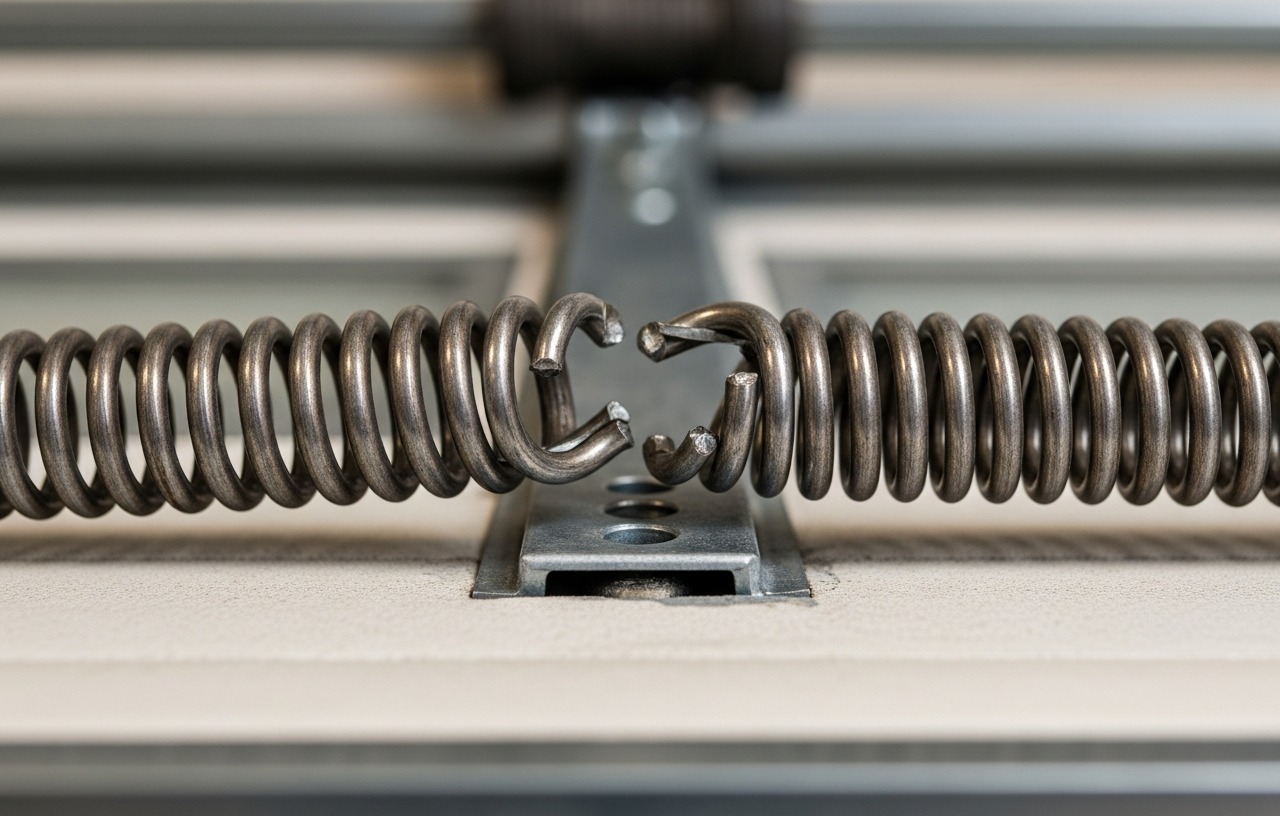
Most garage door springs are rated for a specific number of cycles. A cycle consists of one opening and one closing of the door. Standard residential springs typically last for 10,000 cycles. Heavily used doors, opening multiple times a day, will reach this limit faster than those used only once or twice. Some manufacturers offer higher-cycle springs, rated for 20,000 or even 30,000 cycles, which can extend the time between replacements. A sudden loud bang from the garage often signifies a spring breaking. what to do right now if your garage door spring breaks.
Torsion Springs: The Workhorse System
Torsion springs are mounted horizontally above the garage door opening, parallel to the door itself. They consist of one or more tightly wound springs around a metal shaft, called a torsion tube. This tube runs through the center of the springs and is connected to cables that attach to the bottom corners of the garage door.
How Torsion Springs Function
When the garage door closes, the cables pull on drums at the ends of the torsion tube, causing the shaft to rotate. This rotation twists the torsion springs, storing potential energy. As the door opens, the springs unwind, releasing this stored energy and lifting the door. The force exerted by the springs directly counteracts the door's weight. Torsion springs are generally considered more durable and offer a smoother, more balanced operation compared to extension springs.
Identifying Torsion Springs
You can identify torsion springs by their horizontal placement directly above the garage door. They are typically found on a metal shaft, often with two springs for a two-car garage door, one on each side of a central bearing plate. Single-car garage doors might use one longer torsion spring. The springs themselves are thick, tightly wound coils of steel wire. You will see cable drums on both ends of the torsion tube, near the corners of the doorframe.
Torsion Spring Specifications
Torsion springs are specified by four main measurements: wire gauge, inside diameter, length, and winding type (left or right wound). These specifications are critical for ordering the correct replacement spring. The wire gauge determines the spring's strength, while the inside diameter and length affect how much energy it can store. For example, a common torsion spring for a 7-foot high door might have a 2-inch inside diameter and be 28 to 36 inches long, depending on the door's weight.
Maintenance and Replacement for Torsion Springs
Torsion springs require minimal maintenance, primarily occasional lubrication with a silicone-based spray. Do not use grease or oil, as these can attract dirt and debris. When a torsion spring breaks, it is under extreme tension and can be dangerous to replace without specialized tools and experience. This cost can increase for larger or heavier doors requiring two springs or specialized high-cycle springs. For a deeper understanding of costs, review .
Extension Springs: The Older, Simpler System
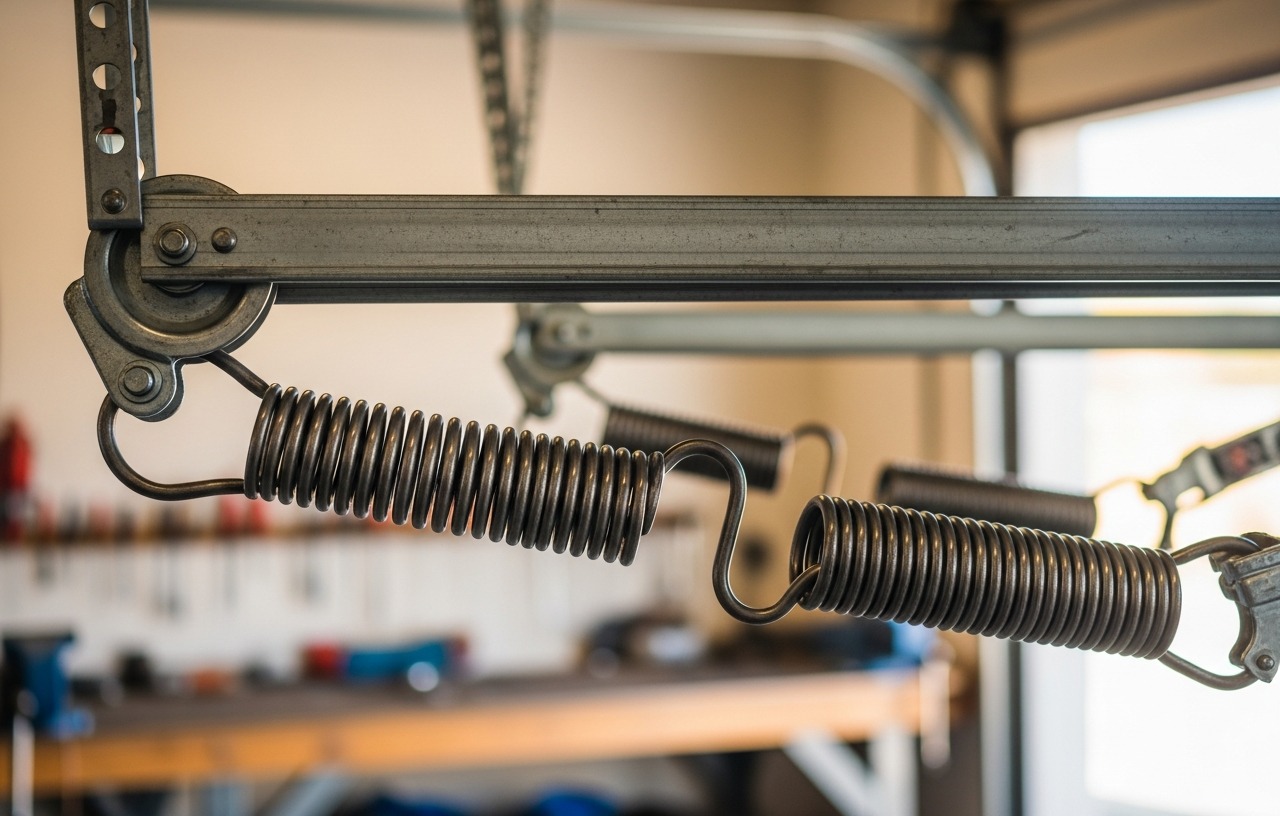
Extension springs are mounted parallel to the horizontal tracks on each side of the garage door. They stretch and contract to counterbalance the door's weight.
How Extension Springs Function
As the garage door closes, the extension springs stretch, storing energy. When the door opens, the springs contract, releasing that energy to help lift the door. Each spring is connected to a pulley and a cable system. The cable runs from the bottom corner of the door, up through the pulley attached to the spring, and then back to the track hanger, creating a mechanical advantage.
Identifying Extension Springs
Extension springs are easily identifiable by their placement: they run along the upper tracks of the garage door, stretching horizontally when the door is closed and contracting when it is open. They are typically found in pairs, one on each side of the door. A key safety feature of extension spring systems is the presence of safety cables that run through the center of each spring. These cables prevent a broken spring from whipping dangerously around the garage.
Extension Spring Specifications and Color-Coding
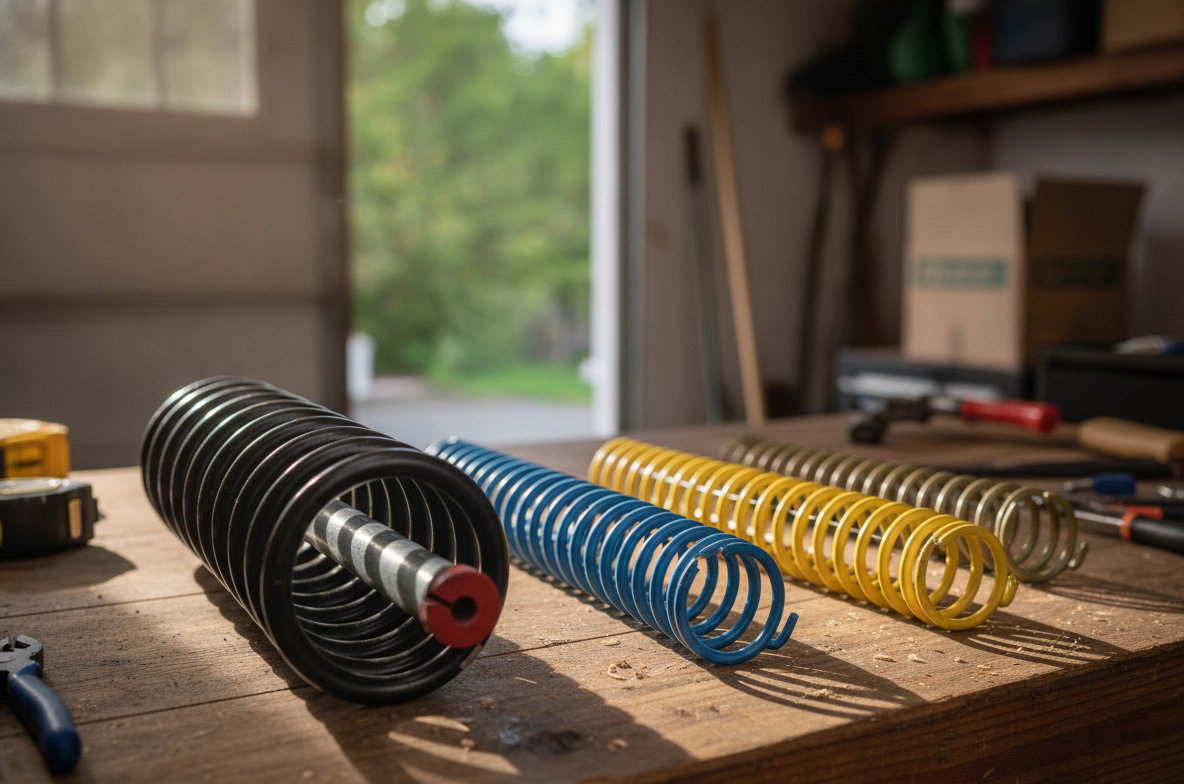
Extension springs are specified by their wire gauge, length, and amount of tension. Unlike torsion springs, extension springs are often color coded at their ends to indicate their lifting capacity. For instance, a green-tipped spring might lift 10 pounds, while a gold-tipped spring lifts 20 pounds. This color-coding helps technicians quickly identify the correct replacement spring for a specific door weight. For example, two springs with a blue tip, each rated to lift 130 pounds, would be used on a 260-pound garage door.
Maintenance and Replacement for Extension Springs
Extension springs benefit from occasional lubrication, just like torsion springs. It is also important to regularly inspect the safety cables running through them. If these cables are frayed or missing, they must be replaced immediately. A broken extension spring without a safety cable can cause significant damage or injury. Replacing extension springs can be performed by experienced DIYers, but still involves working with stored energy. This range accounts for replacing both springs, which is standard practice even if only one breaks, to maintain balanced operation.
Torsion vs. Extension: Key Differences
Understanding the fundamental distinctions between these two spring types is important for troubleshooting and repair.
- Placement: Torsion springs are mounted above the door opening, parallel to the door. Extension springs are mounted parallel to the horizontal tracks.
- Operation: Torsion springs twist to store energy. Extension springs stretch to store energy.
- Safety: Torsion springs are generally considered safer upon breakage because they remain on the shaft. Extension springs require safety cables to contain them if they break.
- Lifespan: Torsion springs often have a longer lifespan and offer a smoother operation, especially higher-cycle versions.
- Cost: Torsion spring systems are generally more expensive initially, both for parts and professional installation. Extension springs are typically less costly to replace.
- Balance: Torsion spring systems generally provide better door balance and stability.
Identifying Your Garage Door Spring Type
The easiest way to determine your spring type is by looking at its location and how it functions:
- Look above the door: If you see one or two large, tightly wound springs running horizontally on a metal shaft directly above the garage door opening, you have torsion springs.
- Look along the tracks: If you see springs running along the side tracks, stretching and contracting as the door moves, you have extension springs. Check for safety cables running through the center of these springs.
When to Call a Professional for Spring Repair
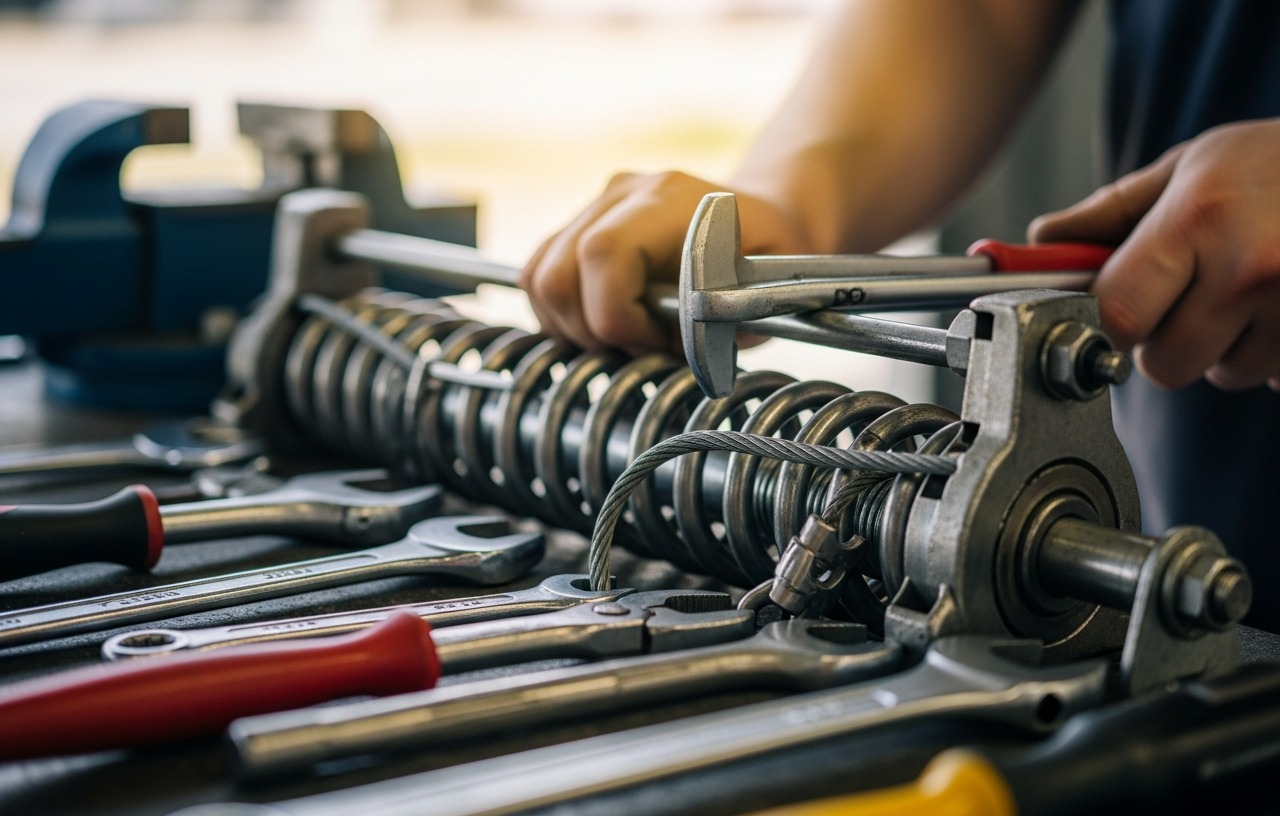
While some homeowners consider DIY spring replacement, working with garage door springs is extremely dangerous. Springs are under immense tension, and improper handling can lead to severe injury, including broken bones, lacerations, or even death. Without the correct tools, such as winding bars for torsion springs, and proper training, the risk is too high.
A professional garage door technician has the specialized tools, knowledge, and experience to safely replace broken springs. They also know how to properly balance the door after spring installation, which is critical for smooth operation and the longevity of your garage door opener. Service calls for garage door issues typically range from $80-$150, which covers diagnosis and minor adjustments. Spring replacement costs, as noted, are additional. If your garage door is exhibiting issues like making a grinding noise or not opening, a professional can diagnose the exact cause.
Always prioritize safety. If you are unsure about your ability to safely handle spring repair, contact a qualified garage door professional. They can provide a safe and effective solution, ensuring your garage door operates correctly and securely.